
Turf That Establishes Correctly From the Start
Lawn Installation in Susquehanna for new construction sites, damaged turf areas, and properties requiring grass reestablishment
Proper lawn installation requires more than spreading seed or laying sod—it involves preparing soil to support root development, establishing grades that prevent water pooling, and selecting grass varieties suited to sun exposure and intended use. Homeowners need professional lawn installation when existing turf has failed due to poor drainage, soil compaction, or damage from construction activity. Solid Ground Property Resolutions installs lawns across Susquehanna and nearby communities, using site preparation methods that give grass the foundation it needs to establish healthy growth rather than struggling in unsuitable conditions.
Installation begins with evaluating soil composition and pH, then amending with organic matter or lime if testing shows deficiencies that would limit grass growth. The site is graded to eliminate low spots where water collects and turf drowns, then lightly compacted to prevent settling while maintaining enough porosity for root penetration. Seed selection or sod variety depends on whether the area receives full sun, partial shade, or heavy foot traffic that requires more durable grass types.
Request an assessment to review soil conditions and lawn replacement options for your property.
Why Proper Installation Works for Long-Term Lawn Success
Site preparation includes removing debris, rocks, and dead vegetation that interfere with seed-to-soil contact or prevent sod roots from reaching native soil. Grading addresses drainage patterns so water moves away from structures and across the lawn surface without creating erosion channels or standing puddles. Starter fertilizer is incorporated at rates based on soil test results rather than guesswork, providing nutrients that support initial root development without burning young grass.
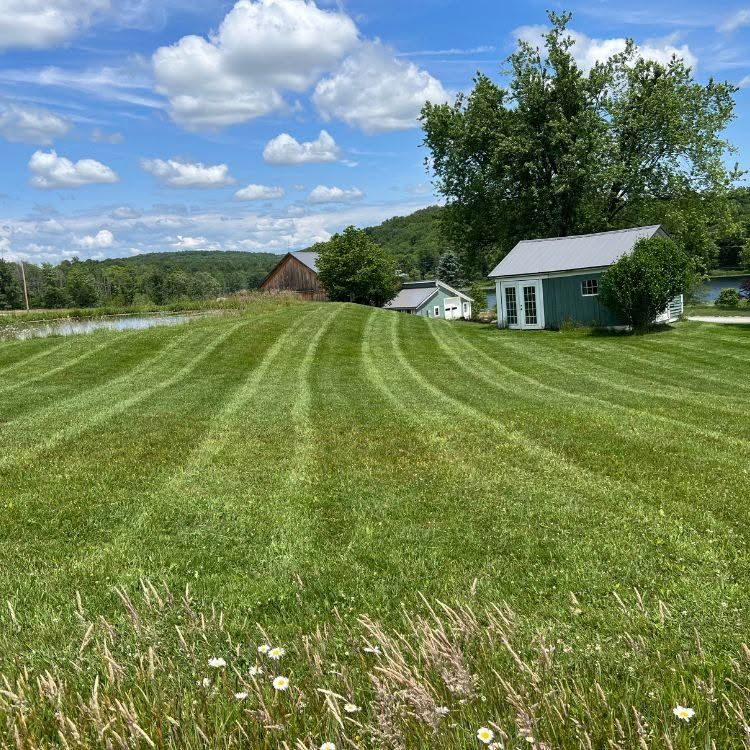
Once installation is complete and grass establishes, you notice uniform green coverage without bare patches, turf that remains firm underfoot rather than spongy or muddy, and grass that thickens over time instead of thinning out. The lawn handles typical rainfall without puddling, and roots grow deep enough to access moisture during dry periods. New turf installed over properly prepared soil establishes faster and requires less water than grass seeded into compacted or poorly graded ground.
Lawn installation includes soil preparation, grading, and grass establishment, but ongoing maintenance such as mowing, fertilization, and irrigation management remains the property owner's responsibility. Coordination with irrigation installation or drainage improvements may be necessary depending on site conditions and should be planned before lawn work begins.
Questions Before Starting Your Project
Lawn installation decisions affect how quickly grass establishes and how well it performs over multiple seasons.
What site preparation is required before installing a new lawn?
Soil is tested for pH and nutrient levels, graded to eliminate drainage problems, and amended based on test results to create conditions that support healthy grass growth.
How do soil conditions in Susquehanna affect lawn installation?
Pennsylvania soils often require lime applications to correct acidity and organic matter additions to improve clay-heavy soil structure and drainage capacity.
When is the best time to install a new lawn?
Early fall provides ideal conditions for seed germination and root establishment, though spring installation also succeeds when moisture and temperature support grass growth.
What is the difference between seeding and sodding?
Sod provides instant coverage and erosion control but costs more, while seeding costs less and allows wider grass variety selection but requires more time to establish.
How long before a new lawn can handle foot traffic?
Seeded lawns need six to eight weeks of limited use to establish root systems, while sod tolerates light traffic sooner but still requires initial establishment time before heavy use.
Solid Ground Property Resolutions focuses on soil preparation and installation techniques that support long-term lawn health. Reach out to discuss grass establishment needs for new construction, renovations, or damaged turf areas on your property.